
'%20fill='%23FFFFFF'%20fill-rule='nonzero'%3e%3cg%20id='User'%20transform='translate(305.750000,%2028.500000)'%3e%3cpath%20id='Shape'%20d='M10,0%20C4.4797258,0.00620755447%200.00620755447,4.4797258%201.77635684e-16,10%20C0.00938473715,15.5189555%204.48104446,19.9906153%2010,20%20C15.5228475,20%2020,15.5228475%2020,10%20C20,4.4771525%2015.5228475,0%2010,0%20Z%20M16.082472,15.770264%20C14.9367487,13.4596888%2012.5799723,11.9985982%2010.0009342,11.9999964%20C7.42189607,12.0013946%205.06670523,13.4650399%203.923488,15.776856%20C2.42807156,14.2261103%201.59478073,12.1543109%201.59997563,10%20C1.59997563,5.3608081%205.3608081,1.6%2010,1.6%20C14.6391919,1.6%2018.4000223,5.3608081%2018.4000223,10%20C18.4049827,12.1511749%2017.5740167,14.2201438%2016.082472,15.770264%20Z%20M10,4%20C8.0117749,4%206.4,5.6117749%206.4,7.6%20C6.4,9.5882251%208.0117749,11.2%2010,11.2%20C11.9882251,11.2%2013.6,9.5882251%2013.6,7.6%20C13.6,6.64522064%2013.2207154,5.72954655%2012.5455844,5.05441559%20C11.8704534,4.37928463%2010.9547794,4%2010,4%20L10,4%20Z'%20/%3e%3c/g%3e%3c/g%3e%3c/g%3e%3c/svg%3e)
Directions to the Nuremberg Airport
Address details
Current Traffic Information for Your Trip
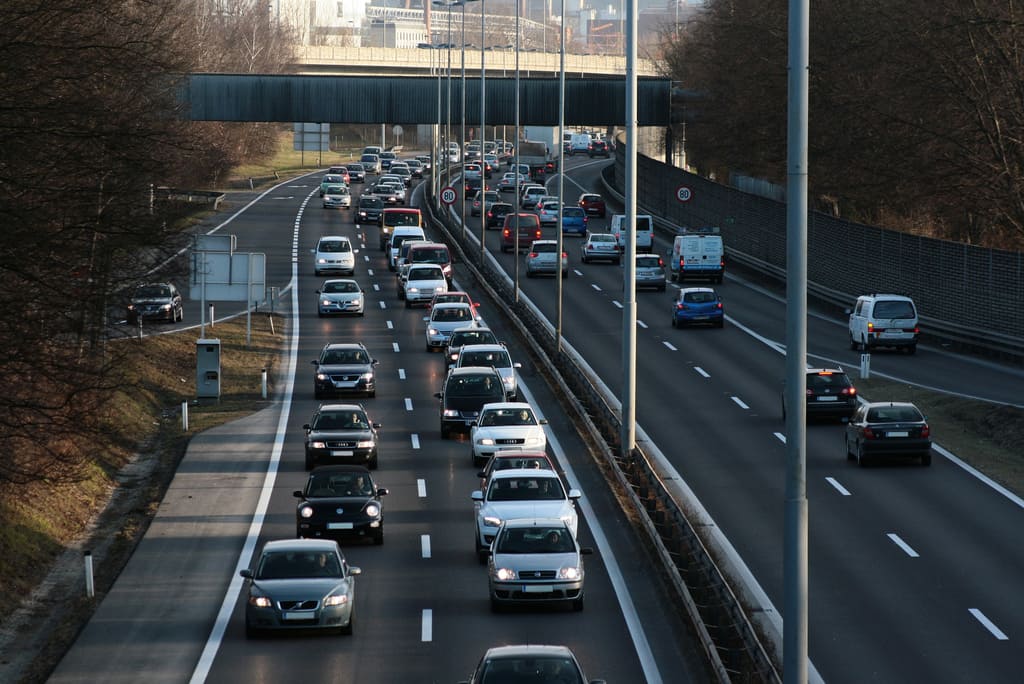
We want you to arrive at Nuremberg Airport on time and relaxed. Therefore, we have compiled an overview of the heavily trafficked motorways in the Franconia region, as well as useful information regarding German traffic regulations. Please always plan a time buffer, as traffic density around Nuremberg can fluctuate significantly.
Optimal Connectivity
Nuremberg Airport is quickly and comfortably accessible thanks to its location on the **A3 (Frankfurt-Nuremberg)** and **A9 (Munich-Berlin)** motorways. Simply follow the signage. Remember to enter the exact address of your Parkos car park into your navigation system to ensure you arrive directly at the correct pickup point.
Estimated Travel Times
Under normal conditions (no traffic jams), you can expect the following approximate driving times:
- Munich to Nuremberg: approx. 170 km; 2.5 hours driving time
- Stuttgart to Nuremberg: approx. 210 km; 3.0 hours driving time
- Erfurt to Nuremberg: approx. 200 km; 2.5 hours driving time
- Würzburg to Nuremberg: approx. 110 km; 1.5 hours driving time
Further Useful Information for Your Trip
Before you begin your journey, we strongly advise you to check your car for technical defects. In particular, check the oil and coolant levels, the lights, and the tires (including the spare tire) to avoid delays and unnecessary stress, allowing you to check in stress-free.
Fuel
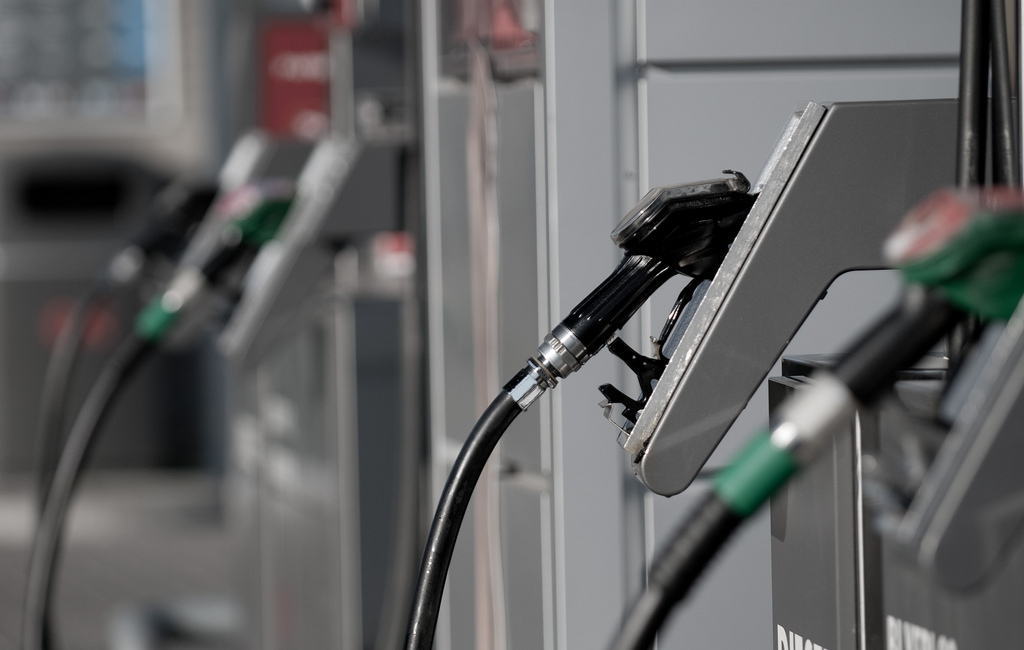
You can easily fill up with all common fuels (petrol, diesel, gas) in Germany. A tip for saving money: petrol stations away from the motorway in villages or small towns are often cheaper. However, Gas (LPG) is less readily available at all rural stations; plan for this on longer routes.
Our experts are happy to help you with any questions you may have about the booking or parking process with us.
Contact us
Book safely and pay securely




Parkos is part of ParkosBV @2026. Registered in the Netherlands.
Chamber of Commerce number: 02095013