'%20fill='%23FFFFFF'%20fill-rule='nonzero'%3e%3cg%20id='User'%20transform='translate(305.750000,%2028.500000)'%3e%3cpath%20id='Shape'%20d='M10,0%20C4.4797258,0.00620755447%200.00620755447,4.4797258%201.77635684e-16,10%20C0.00938473715,15.5189555%204.48104446,19.9906153%2010,20%20C15.5228475,20%2020,15.5228475%2020,10%20C20,4.4771525%2015.5228475,0%2010,0%20Z%20M16.082472,15.770264%20C14.9367487,13.4596888%2012.5799723,11.9985982%2010.0009342,11.9999964%20C7.42189607,12.0013946%205.06670523,13.4650399%203.923488,15.776856%20C2.42807156,14.2261103%201.59478073,12.1543109%201.59997563,10%20C1.59997563,5.3608081%205.3608081,1.6%2010,1.6%20C14.6391919,1.6%2018.4000223,5.3608081%2018.4000223,10%20C18.4049827,12.1511749%2017.5740167,14.2201438%2016.082472,15.770264%20Z%20M10,4%20C8.0117749,4%206.4,5.6117749%206.4,7.6%20C6.4,9.5882251%208.0117749,11.2%2010,11.2%20C11.9882251,11.2%2013.6,9.5882251%2013.6,7.6%20C13.6,6.64522064%2013.2207154,5.72954655%2012.5455844,5.05441559%20C11.8704534,4.37928463%2010.9547794,4%2010,4%20L10,4%20Z'%20/%3e%3c/g%3e%3c/g%3e%3c/g%3e%3c/svg%3e)
Directions to the Málaga Airport
Address of Málaga Airport
Prepare for Departure: Route to Málaga-Costa del Sol Airport
Your tickets are ready, your parking space is booked through Parkos, now all that’s left is the drive! For your holiday to get off to a good start, great planning is essential. Remember that you should arrive at the airport at least two hours early for check-in and security controls. Be sure to account for possible unforeseen events like heavy traffic or changes in weather.
Use our route tool below to calculate your travel time. We also provide some helpful tips and road information here to make your arrival at Málaga easier.
Accessing Málaga Airport (AGP)
The airport is easily accessible via several major roads. Here are the main directions, depending on where you are starting from:
- **From the South (e.g., Marbella)**: Take the AP-7 motorway, then take Exit 0 to join Avenida de Velázquez. Continue via Exit 3 onto the N-340.
- **From the East (e.g., Nerja or Motril)**: Follow the A-7, then continue on the MA-20. Take Exit 5A from the MA-20 and follow Av. de Velázquez / MA-21 until your destination.
- **From the North (e.g., Antequera)**: Take the A-45 towards Málaga, then follow the MA-20. Then take Exit 5A and continue on Av. de Velázquez / MA-21.
Estimated Driving Times
Here are estimates of travel times without heavy traffic, to help you plan your departure:
- Málaga city centre → Málaga Airport: Approximately 12 km, 25 minutes
- Marbella → Málaga Airport: Approximately 55 km, 40 minutes
- Motril → Málaga Airport: Approximately 105 km, 1 hour and 15 minutes
- Antequera → Málaga Airport: Approximately 60 km, 50 minutes
Check This: Real-Time Traffic Status
To avoid unwelcome surprises, we recommend checking the road conditions before you leave. You can check the current traffic status in Spain in real time on the DGT website:
Continuous Road Traffic Map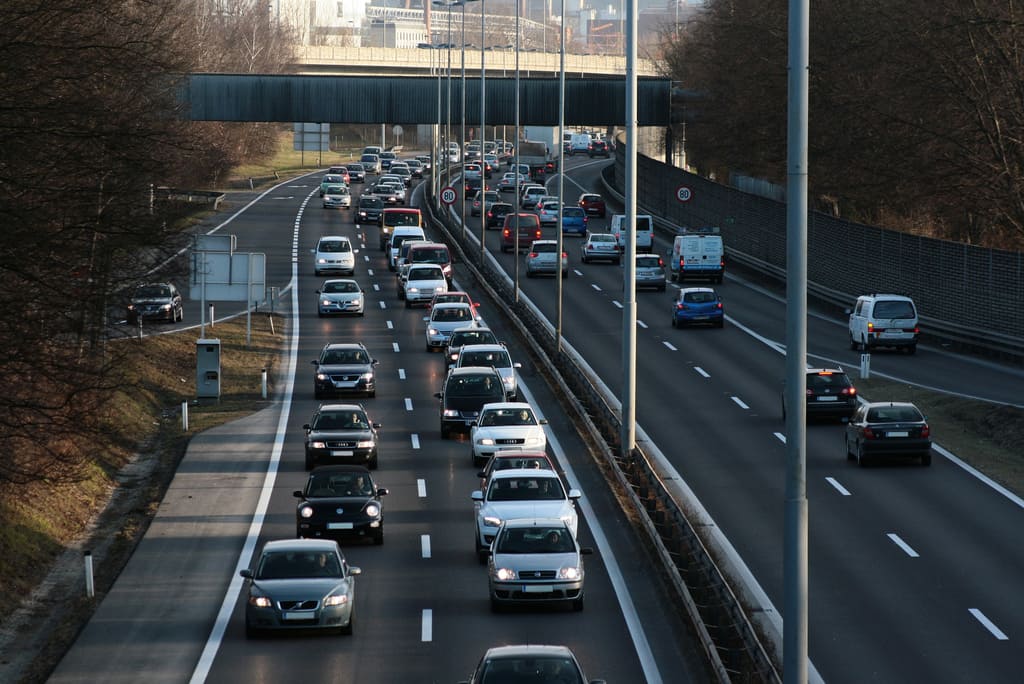
Our Practical Advice Before You Hit the Road
We are dedicated to providing you with a worry-free experience. Before you leave, a few simple checks can make all the difference:
Check Your Car's Condition
A quick check of the basics is always recommended: ensure oil and coolant levels are correct, and your lights are working properly. Don't forget your tire pressure (including the spare tire) for safe driving, especially if weather conditions are not optimal.
Fuel and Tolls
Fill up your tank before you leave! Refuelling at your usual station often allows you to benefit from lower prices and avoid wasting time en route. Also, be aware that some highways in Spain may include toll sections.
What to Do in a Roadside Emergency?
In case of an accident or breakdown, stay calm and get to safety. Pull your vehicle to the side of the road if possible. Put on your reflective vest and deploy your safety triangles. Contact your insurance company and dial the European emergency number **112** if necessary. Emergency call boxes are also available along the highway.
Speed Limits
Safety is our priority. In Spain, speed limits are generally 50 km/h in urban areas, between 90 and 100 km/h on secondary suburban roads, and 120 km/h on motorways and dual carriageways. Respecting these limits is a shared responsibility.