'%20fill='%23FFFFFF'%20fill-rule='nonzero'%3e%3cg%20id='User'%20transform='translate(305.750000,%2028.500000)'%3e%3cpath%20id='Shape'%20d='M10,0%20C4.4797258,0.00620755447%200.00620755447,4.4797258%201.77635684e-16,10%20C0.00938473715,15.5189555%204.48104446,19.9906153%2010,20%20C15.5228475,20%2020,15.5228475%2020,10%20C20,4.4771525%2015.5228475,0%2010,0%20Z%20M16.082472,15.770264%20C14.9367487,13.4596888%2012.5799723,11.9985982%2010.0009342,11.9999964%20C7.42189607,12.0013946%205.06670523,13.4650399%203.923488,15.776856%20C2.42807156,14.2261103%201.59478073,12.1543109%201.59997563,10%20C1.59997563,5.3608081%205.3608081,1.6%2010,1.6%20C14.6391919,1.6%2018.4000223,5.3608081%2018.4000223,10%20C18.4049827,12.1511749%2017.5740167,14.2201438%2016.082472,15.770264%20Z%20M10,4%20C8.0117749,4%206.4,5.6117749%206.4,7.6%20C6.4,9.5882251%208.0117749,11.2%2010,11.2%20C11.9882251,11.2%2013.6,9.5882251%2013.6,7.6%20C13.6,6.64522064%2013.2207154,5.72954655%2012.5455844,5.05441559%20C11.8704534,4.37928463%2010.9547794,4%2010,4%20L10,4%20Z'%20/%3e%3c/g%3e%3c/g%3e%3c/g%3e%3c/svg%3e)
Directions to the Valencia Airport
Address of Valencia Airport
Travel Information: Your Journey to Valencia Airport (VLC)
You have purchased tickets and reserved your accommodation and your parking spot with Parkos. Now it's time to plan when you will leave for the airport and which route you will take. One of the most important things is to leave with enough time to avoid possible delays. A traffic-obstructing accident, a flat tire, or sudden rain are factors we cannot control and which may delay us. Therefore, in this section, we want to give you some advice on traffic information and precautions you can take to be prepared for any unforeseen events on your way to Valencia Airport.
Key Routes to the Airport
Valencia Airport is primarily accessed via the **A-3 motorway** and the **V-11 access road**.
- **If approaching from Central Valencia:** Take the E-901/A-3, then the V-11, and exit at E-901. Then follow the CV-370 to the airport.
- **If approaching from the South (Alcira):** Take the A-7 and the V-31 towards the V-30. Then merge onto the E-901/A-3 and finally take the V-11 to your destination.
- **If approaching from the North (Almenara, Castellón):** Take the E-15/AP-7 and follow it to the N-220, where you should take Exit 14AB from the V-30 dual carriageway. Finally, follow the N-220 to the Airport.
- **If approaching from the West (Requena, Siete Aguas):** Drive along the E-901/A-3 and take Exit 348. Take the V-11 to your destination.
Approximate Driving Times
With optimal weather conditions, the approximate driving times from major nearby cities would be:
- Valencia to Valencia Airport: 10 km / 13 minutes
- Alcira to Valencia Airport: 50 km / 40 minutes
- Castellón de la Plana to Valencia Airport: 75 km / 50 minutes
- Requena to Valencia Airport: 65 km / 40 minutes
Check Real-Time Traffic Conditions:
You can check the real-time traffic status in Spain using the following map. You can use the filters to select the province you are interested in:
Continuous Traffic Map (DGT)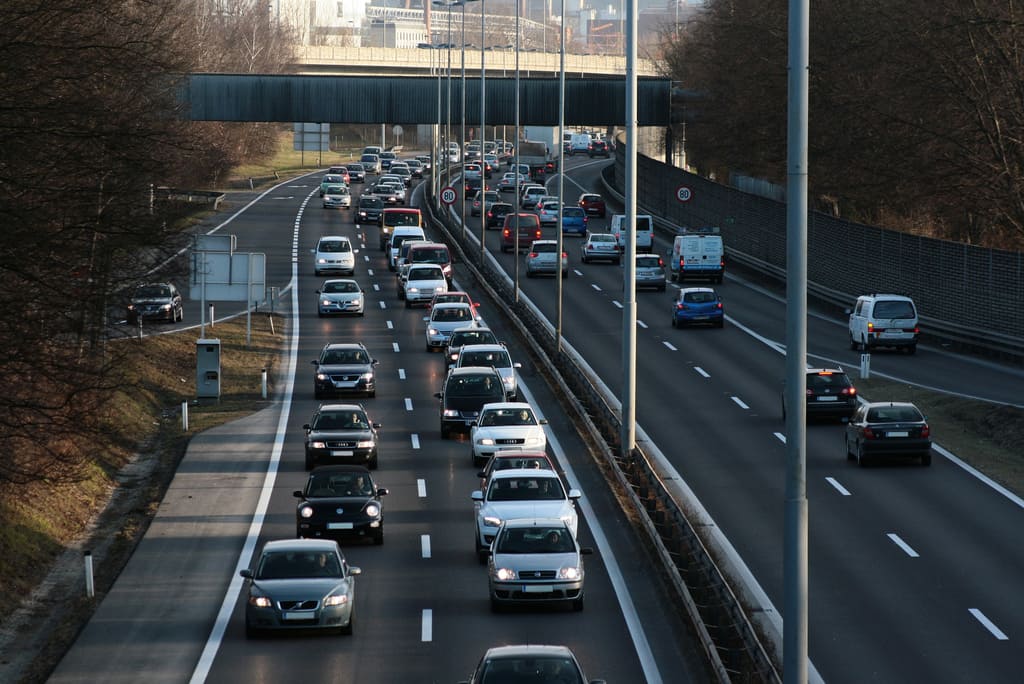
Useful Information: Vehicle Preparation and Spanish Rules
The first recommendation before travelling is to carry out a car inspection. Checking that all lights are working correctly, ensuring the tires (including the spare wheel) are in good condition, with adequate pressure, and ready for rain or snow, are some basic checks. Do not forget the oil level or the coolant. Ensuring these small elements function properly will provide safety for you, your passengers, and other drivers.
You may encounter some tolls during your journey, especially if using the AP-7.
Fuel
Except for LPG, which is not as easy to find as other fuels, especially in the city due to safety reasons, refuelling your petrol or diesel car should not be a problem. If you have a regular gas station, we recommend filling your tank there before leaving. This way, you won't waste time refuelling during the journey, and prices will likely be more affordable than if you decide to refuel on the motorway.